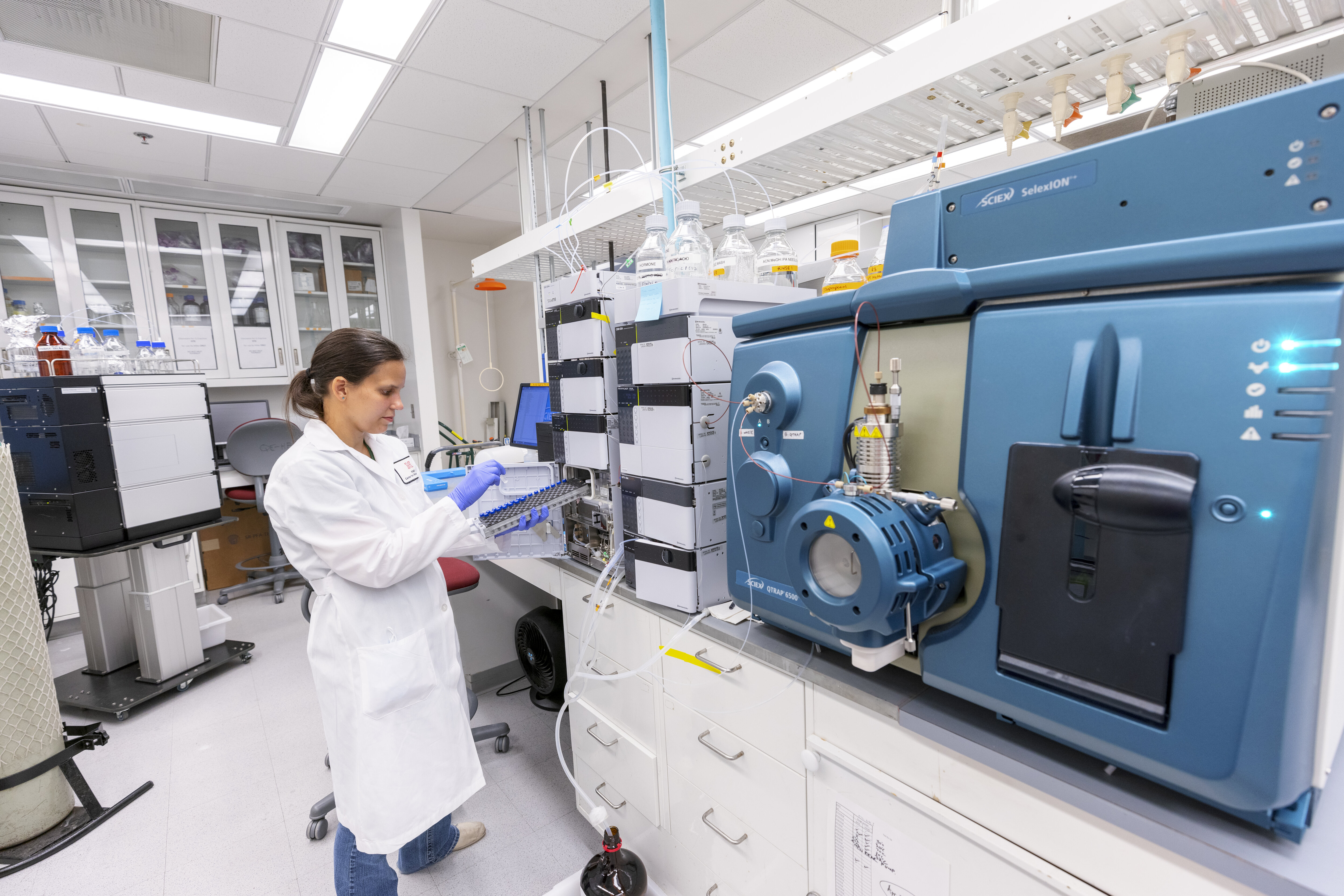
Sciex QTRAP 6500+ mass spectrometer with SelexION+ ion mobility coupled to Shimadzu Nexera II UHPLC
Sciex QTRAP 6500+ mass spectrometer with SelexION+ ion mobility coupled to Shimadzu Nexera II UHPLC
Targeted quantification of a wide range of small molecules.
Up to 6 orders of detector dynamic range
Polarity switching speeds of 5 msec
Mass range 50-2000 m/z
Scan speeds of up to 20,000 Da/second
SelexION+ Differential Ion Mobility Technology for added selectivity
UHPLC with extended pressure range up to 19,000 psi for the smallest particle columns
Increased chromatographic reproducibility through use of micro-volume plungers
Autosampler has multiple rinsing lines enabling low sample carry over
High-speed injection
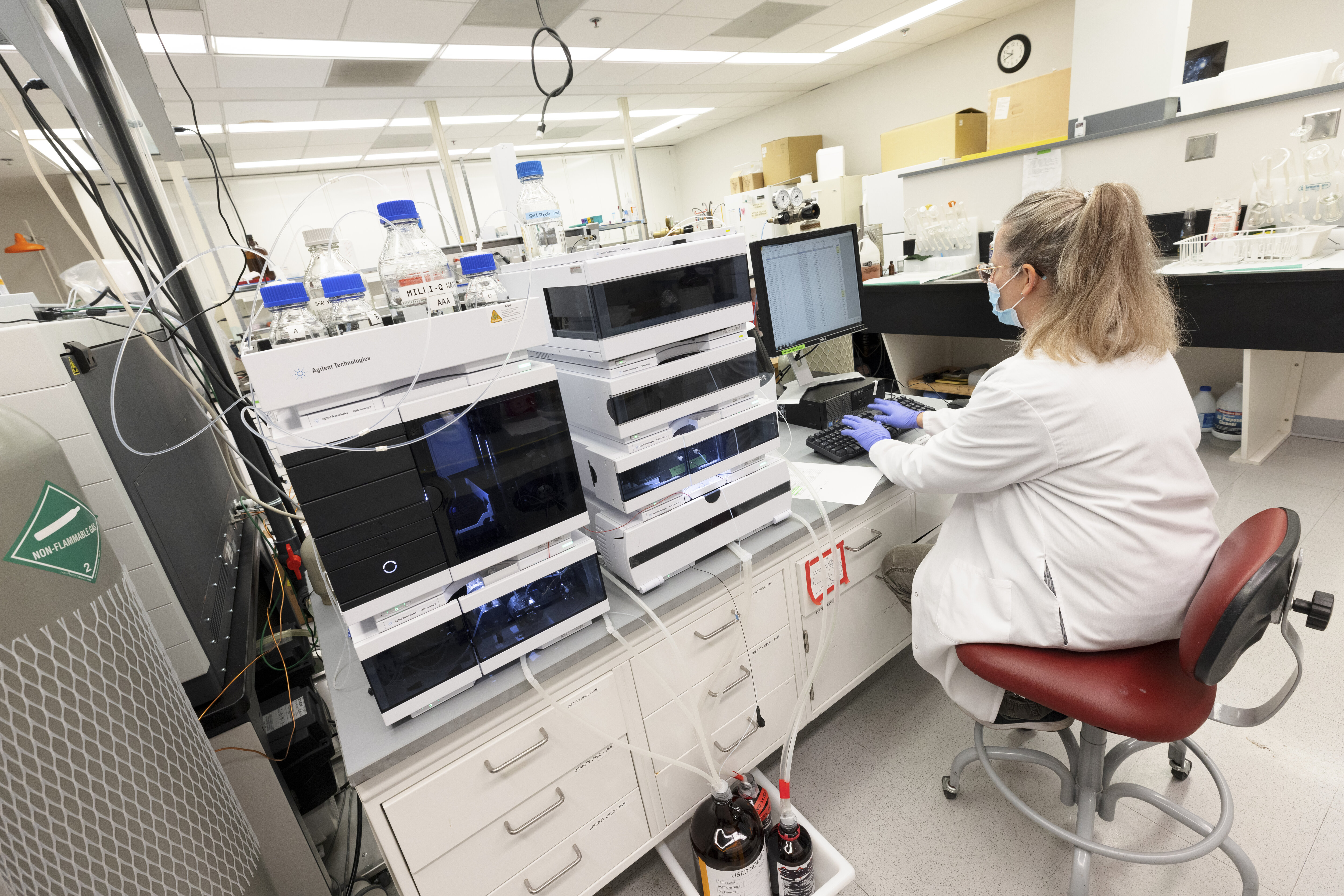
Agilent 1290 Infinity II UPLC
Separation, profiling and quantification of a wide range of small molecules: PEG, dyes, vitamins, organic acids, carbohydrates, triglycerides, phospholipids, FAME, and more….
Peptide and protein fractionation for proteomics applications.
Flow rate range: 0.05 to 5 mL/min
Pressure 1300 bar (18,800 psi)
Multicolumn thermostat and multisampler
DAD, ELSD and Fluorescence detector allowing detection of a wide range of compounds (absorbing, fluorescent, non-volatile, and semi-volatile compounds)
Agilent 1290 Infinity II UPLC
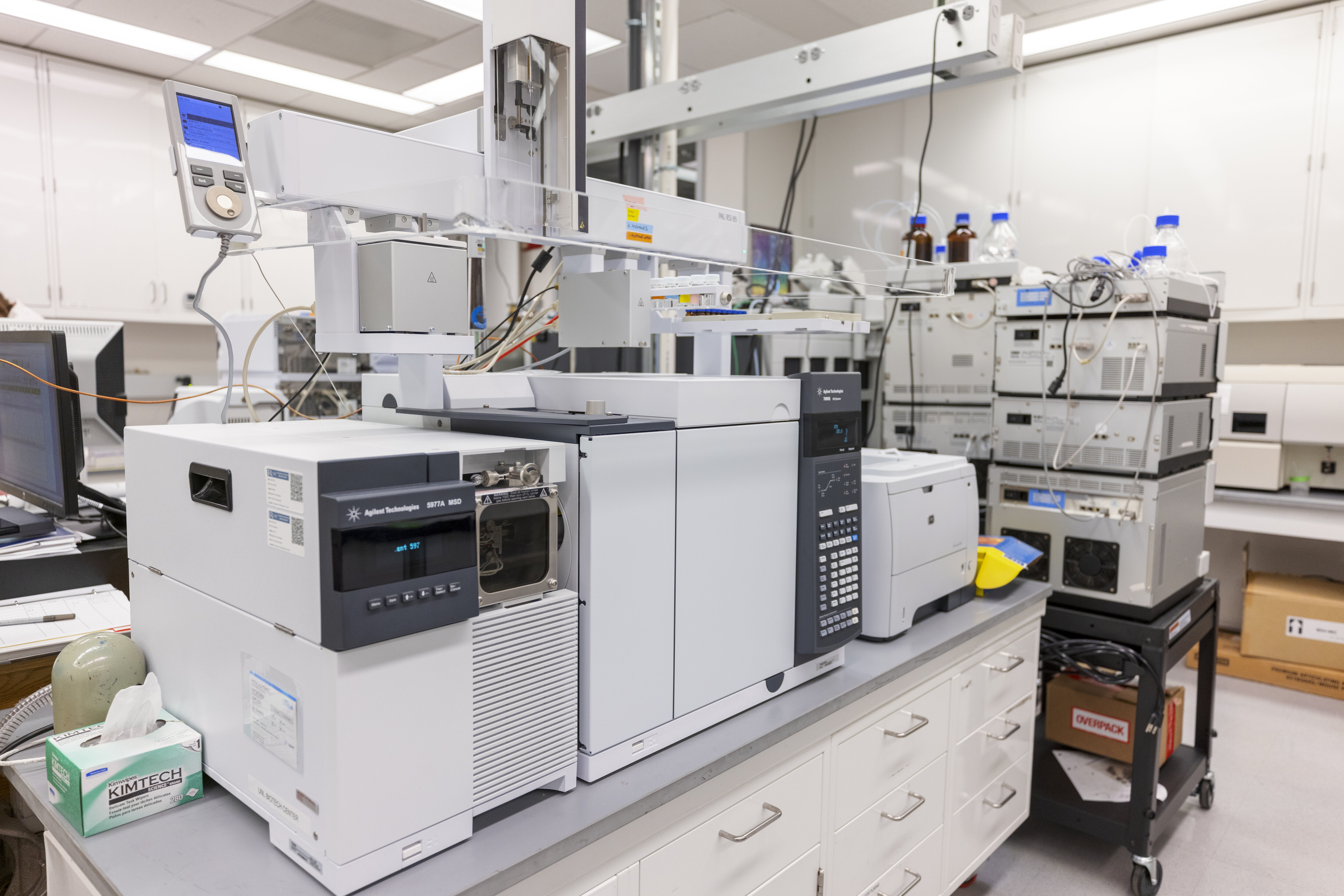
Agilent GC-MS 5977A
Agilent GC-MS 5977A
Targeted and untargeted profiling and quantification of volatile compounds for food regulation, environmental analysis, forensic analysis, drug detection, research.
Headspace sampler for analysis of volatile and semi-volatile compounds in solid, liquid and gas samples (without sample extraction)
NIST and Fiehn GC-MS compound libraries for identification/confirmation of unknown volatile compounds
Integrates with Mass Profiler Professional for qualitative and quantitative studies
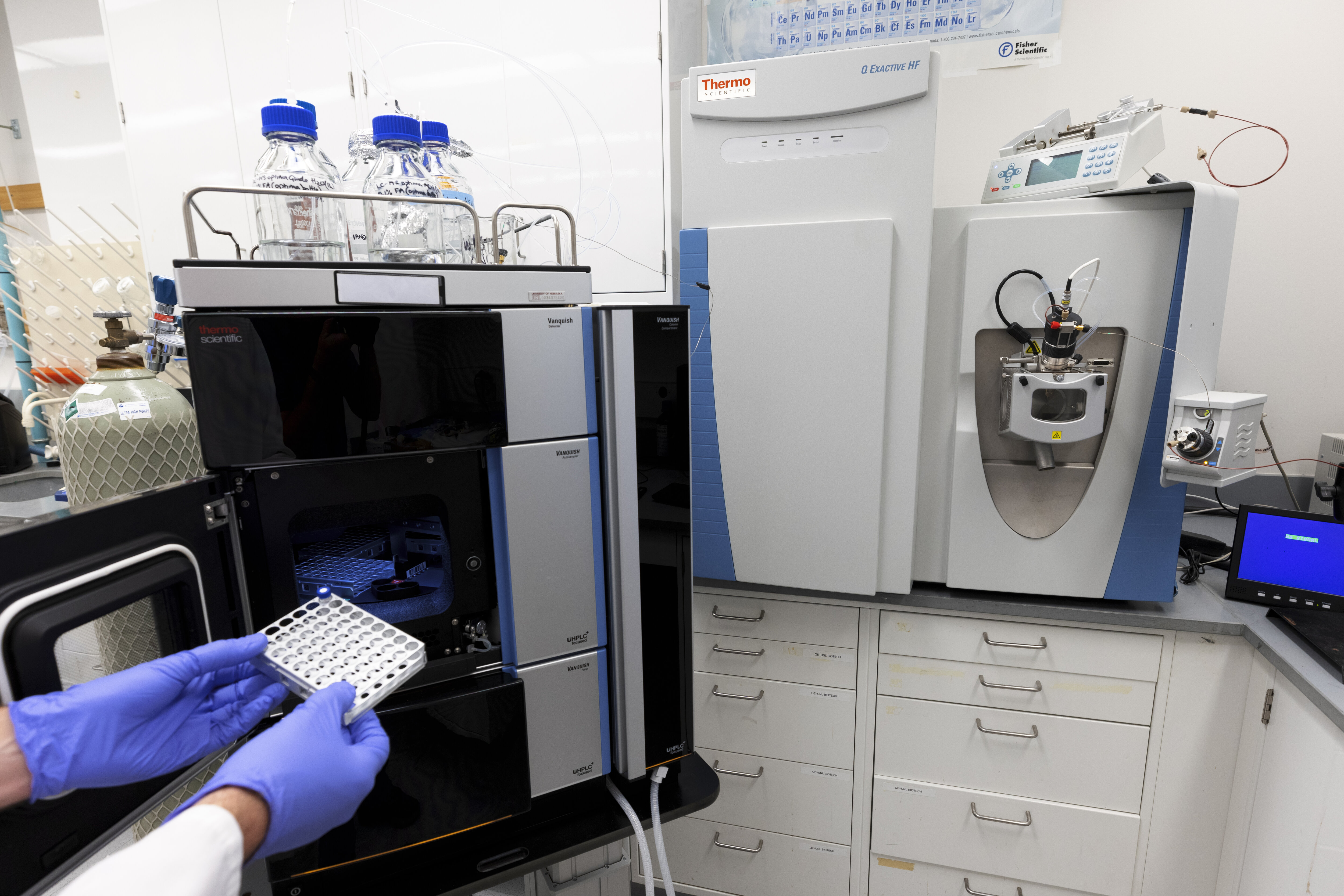
Thermo Q-Exactive – High Field (QE-HF) coupled to Thermo Vanquish H binary UPLC
Thermo Q-Exactive
Untargeted profiling and quantification of metabolitc compounds
High Resolution/Accurate Mass (HR/AM) instrument
Resolving power up to 240,000 at 200 m/z
Sub ppm mass accuracy
Scan speed of 18 Hz at 15,000 resolution
Flow rate of the nanopump: 20 nL/min to 1.5 µL/min