#BiotechMonday Features

#BiotechMonday: short features about our facilities

Explore the dropdown menus to discover insights on the equipment, facts, and tools utilized across our core facilities

Collage of images highlighting biotechnology core facilities and research activities. Photos include a Cryo‑EM microscope system in a dedicated instrument room, colorful microscopy images of biological samples, hands loading samples into laboratory instruments, a molecular or structural biology visualization, computer screens showing bioinformatics data, and large analytical instruments on lab benches. The collage represents diverse research methods and advanced lab technologies.

Bioinformatics

Custom Bioinformatics Analysis
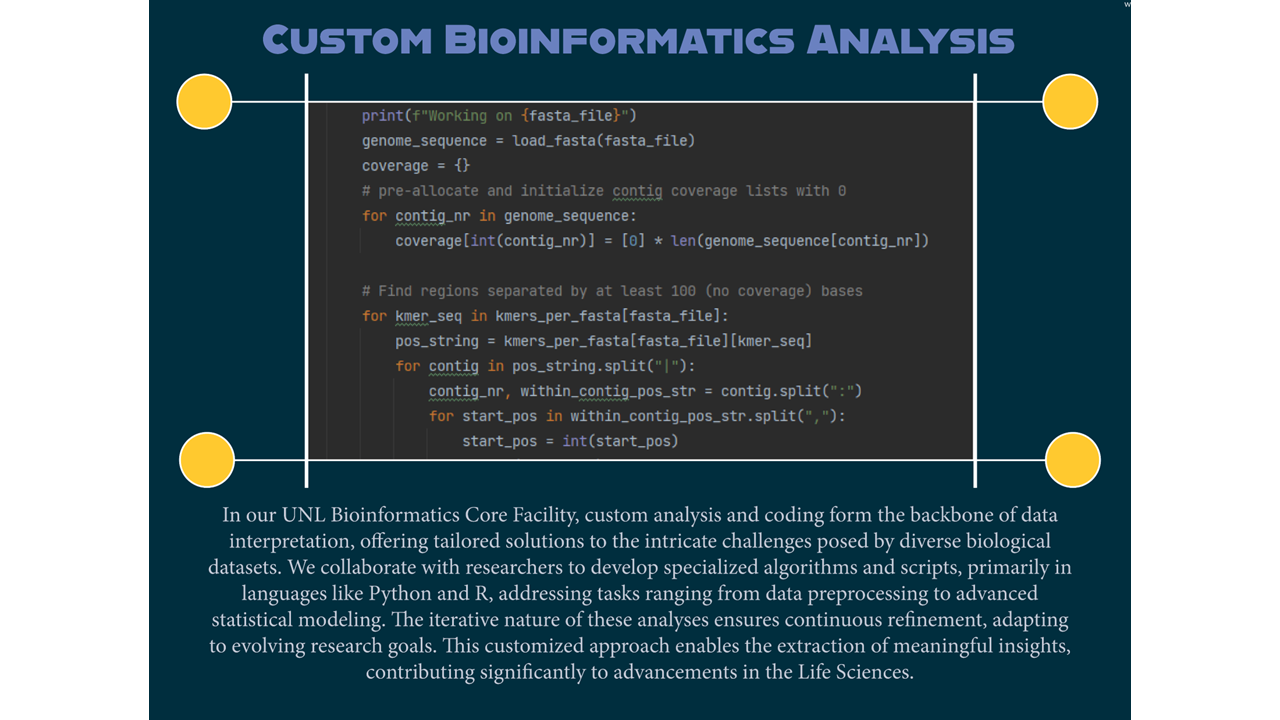
Graphic titled “Custom Bioinformatics Analysis.” The image shows a dark computer code window with programming text related to genome and sequence data processing, framed by circular design elements on a teal background. Below, a text panel explains that the UNL Bioinformatics Core provides customized data analysis and coding solutions, collaborating with researchers to develop scripts and algorithms in languages such as Python and R to support biological research and data interpretation.
Keeping Resources Current
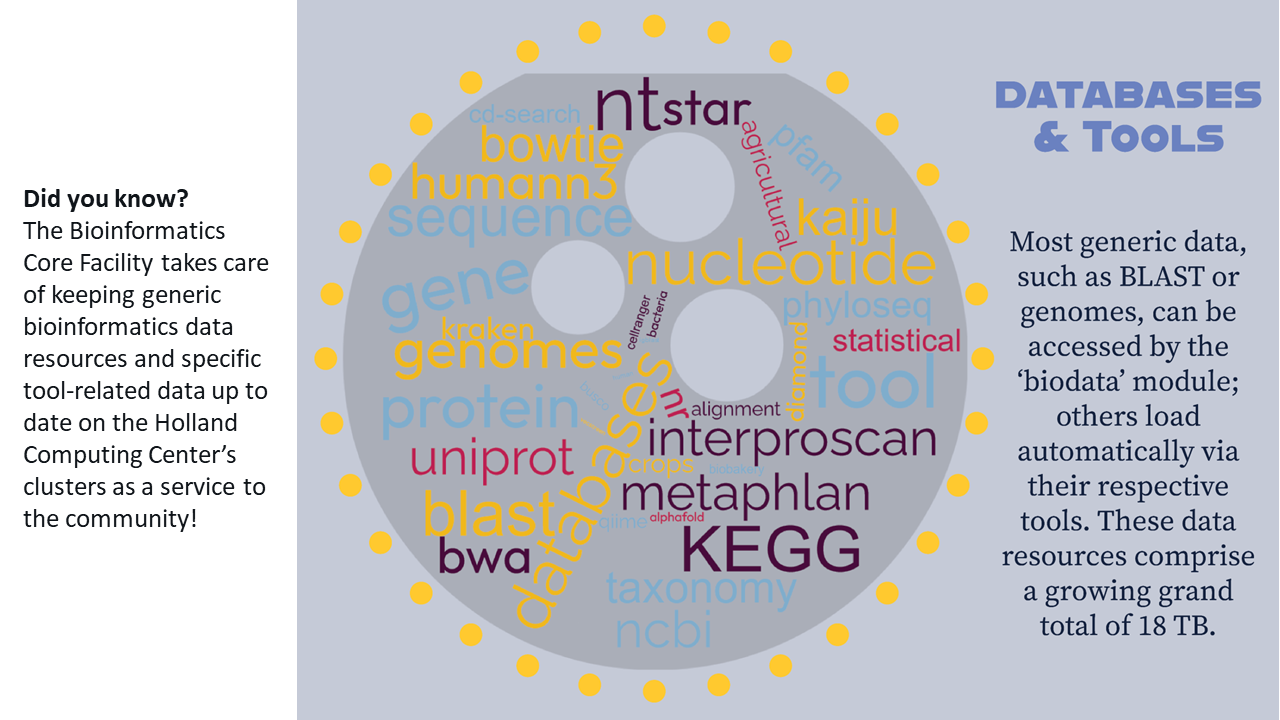
Informational graphic about the Bioinformatics Core Facility. The center features a circular word cloud of bioinformatics databases and tools, including BLAST, KEGG, UniProt, InterProScan, Bowtie, BWA, genomes, protein, nucleotide, taxonomy, and NCBI. Text explains that the core maintains generic and project‑specific bioinformatics data on university computing clusters and that common datasets are accessible through the “biodata” module, totaling about 18 terabytes.
RNA-Seq Analysis
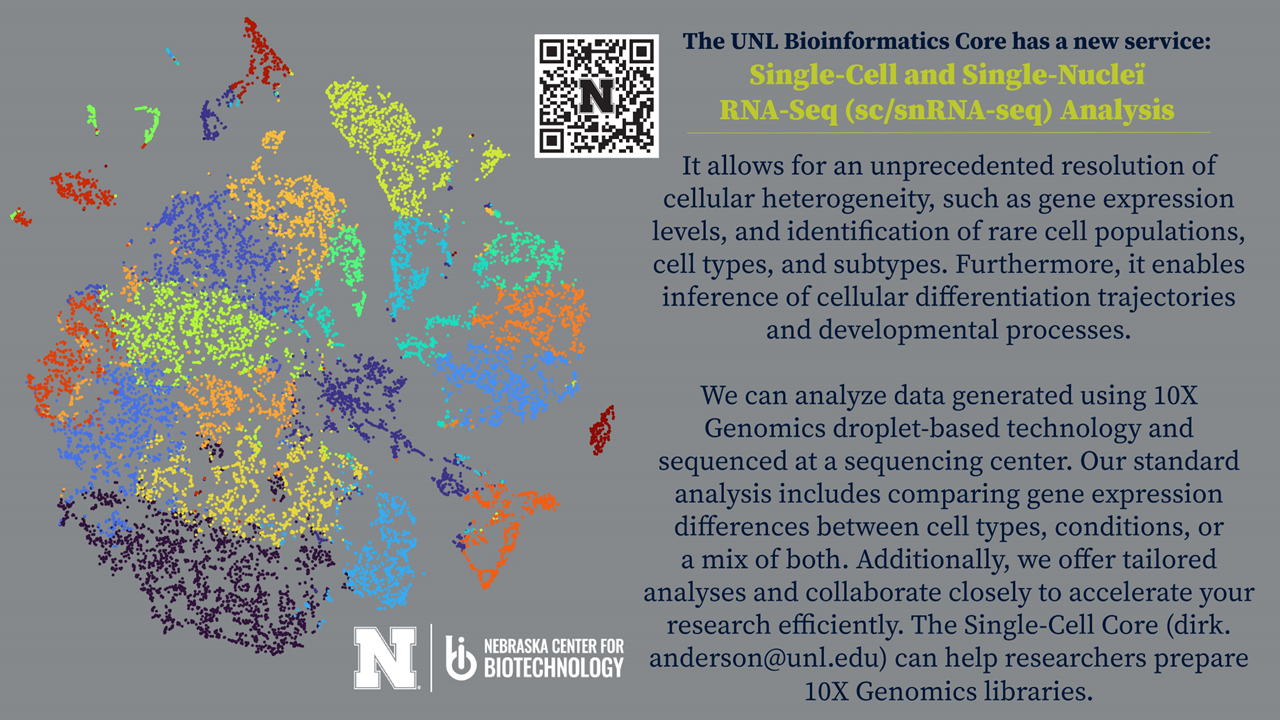
Informational graphic from the UNL Bioinformatics Core announcing a new service: Single‑Cell and Single‑Nuclei RNA‑Seq analysis. The left side shows a colorful clustered data visualization representing different cell populations. The right side contains text explaining applications such as identifying cellular heterogeneity, rare cell types, and differentiation trajectories, with mention of 10x Genomics data analysis and tailored bioinformatics support. A QR code and logo for Biotech at bottom.
"Mother of Bioinformatics'
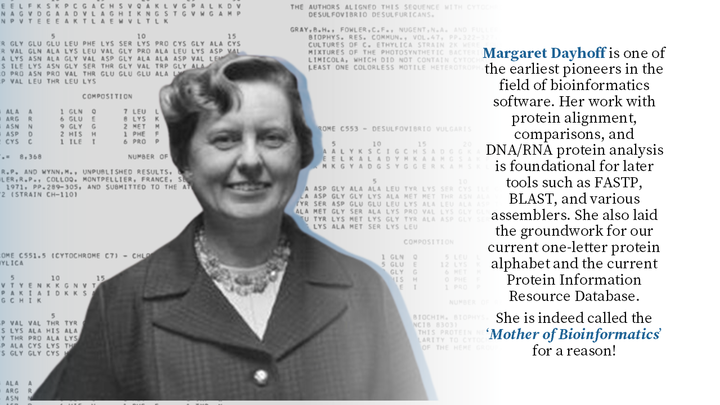
Info graphic featuring a grayscale portrait alongside text about Margaret Dayhoff. The text describes Margaret Dayhoff as an early pioneer in bioinformatics, noting foundational work in protein alignment, DNA and RNA analysis, tools such as FASTP and BLAST, and contributions to the one‑letter protein alphabet and the Protein Information Resource Database. The phrase “Mother of Bioinformatics” is highlighted. The background includes protein sequence text.

CryoEM

Equipment - PELCO easiGlow Glow Discharge Cleaning System
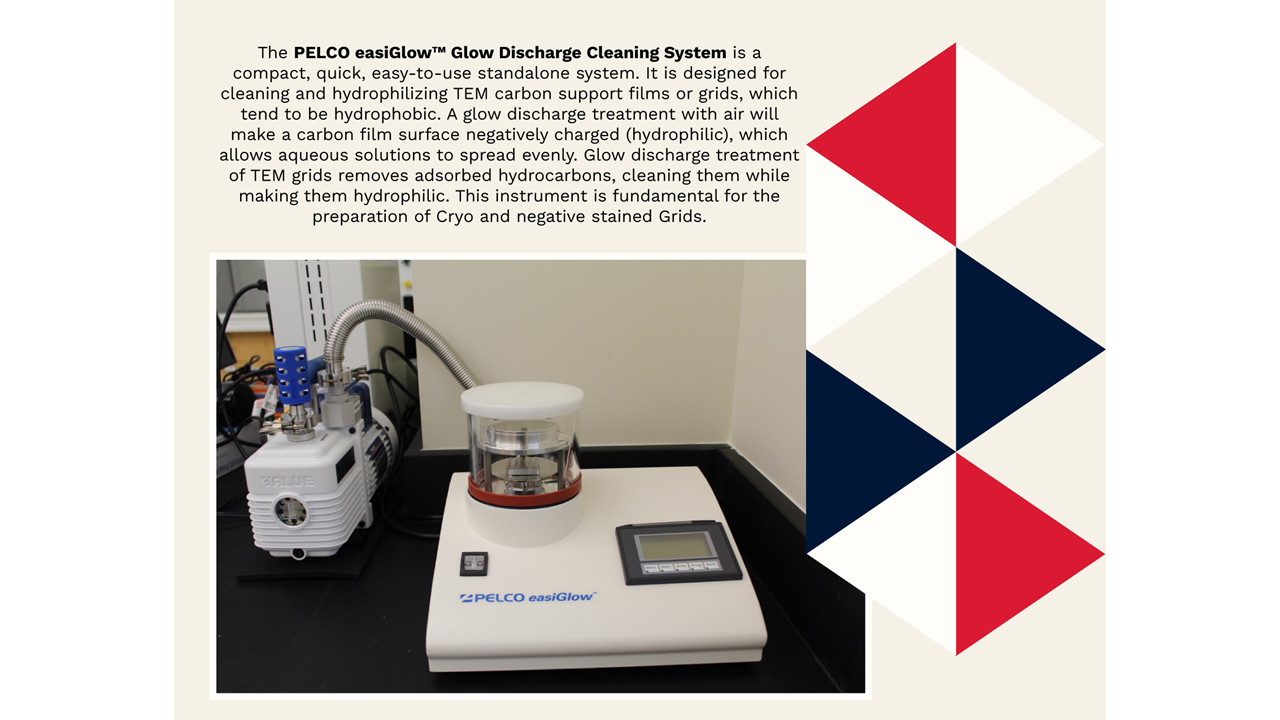
Informational graphic describing the PELCO easiGlow Glow Discharge Cleaning System. The image shows the easiGlow unit on a laboratory bench with a clear cylindrical glass chamber, digital control panel, and a connected vacuum pump via metal tubing. Text explains that the system cleans and hydrophilizes TEM carbon films using glow discharge, making it essential for preparing Cryo and negative stain electron microscopy grids. Decorative red, navy, and gray geometric shapes appear on the right side.
Benchmark Protein - Apoferritin
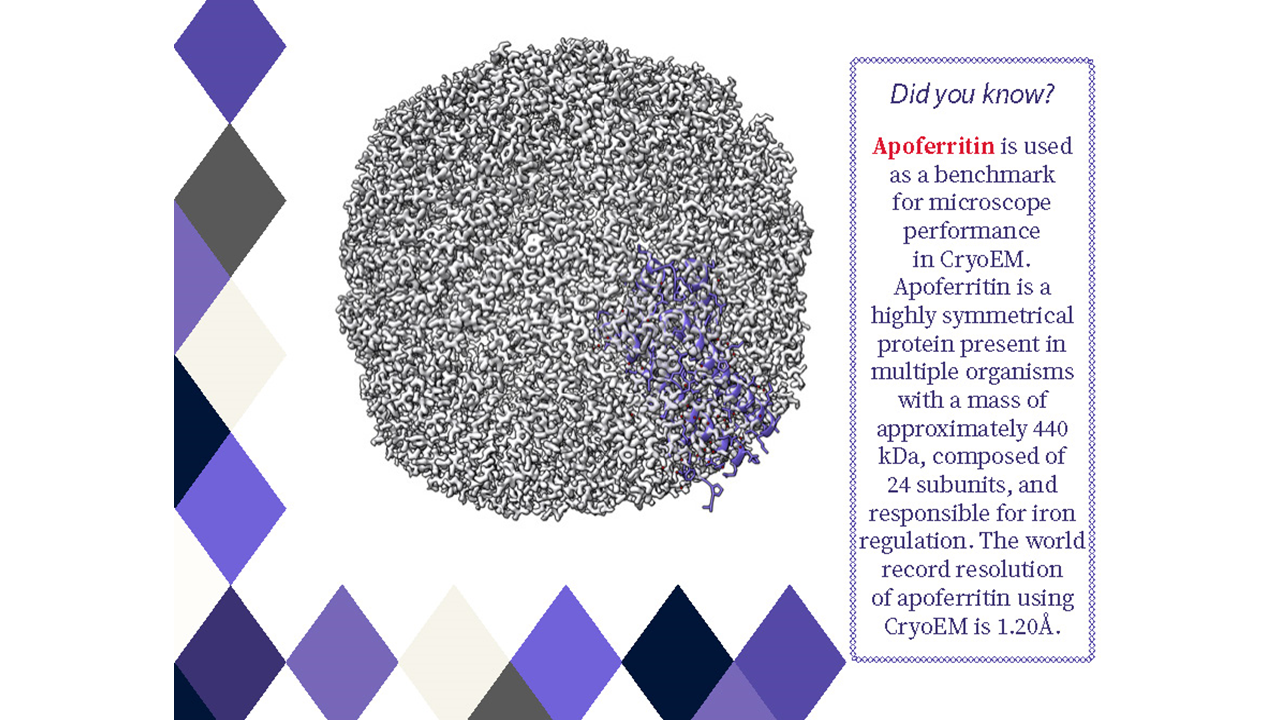
Informational graphic about apoferritin used as a benchmark sample in Cryo‑electron microscopy. The center shows a detailed gray structural model of the apoferritin protein complex. Text explains that apoferritin is a highly symmetrical protein composed of 24 subunits, approximately 440 kDa in mass, involved in iron regulation, and has achieved a world‑record CryoEM resolution of 1.20 Å. Decorative diamond patterns frame image.
Negative Stain EM
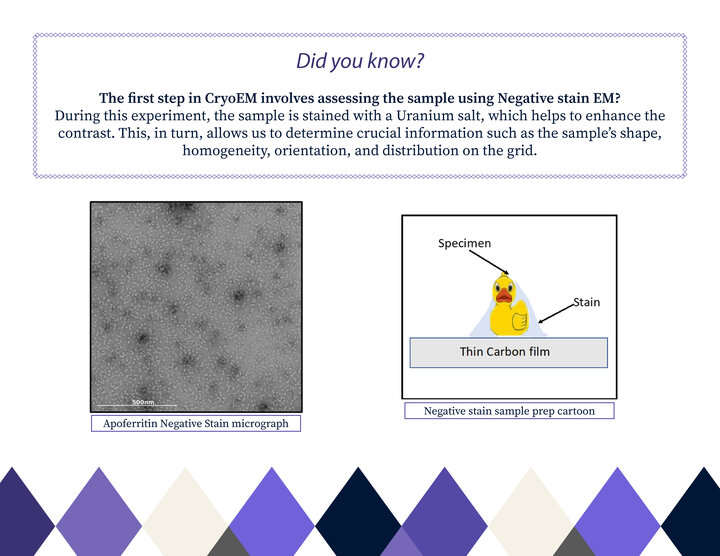
Educational graphic explaining the first step in CryoEM using negative stain electron microscopy. Top text reads “Did you know?” and describes staining samples with a uranium salt to enhance contrast and evaluate shape, homogeneity, orientation, and distribution. Below are two images: a grayscale apoferritin negative‑stain micrograph with a 500 nm scale bar, and a simple diagram illustrating negative‑stain sample preparation on a thin carbon film showing specimen and stain placement.
Flagship Instrument - CryoTEM
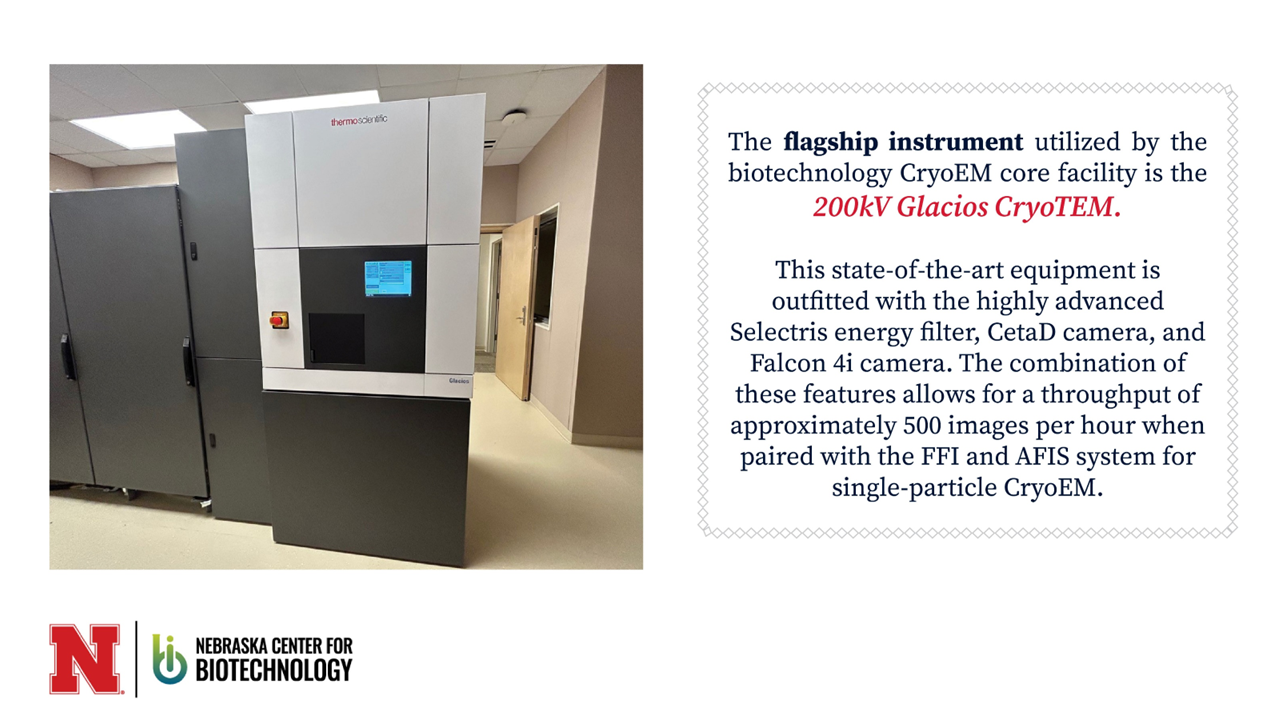
Informational graphic showing a Thermo Fisher Scientific 200kV Glacios CryoTEM installed in a biotechnology facility. The instrument is shown in a hallway‐style lab space with control cabinets and a screen on the front. Accompanying text explains that the CryoEM Core’s flagship instrument includes a Selectris energy filter, CetaD camera, and Falcon 4i camera, enabling high‑throughput single‑particle CryoEM imaging. University of Nebraska and Nebraska Center for Biotechnology logos appear at the bottom..
TFS Vitrobot Mark IV
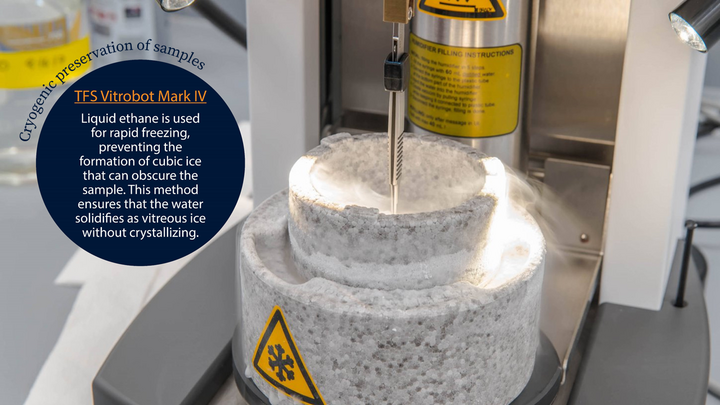
Laboratory image showing a TFS Vitrobot Mark IV used for cryogenic preservation of samples. The instrument is shown freezing a sample in liquid ethane inside a chilled metal chamber marked with a cold‑hazard symbol. Overlaid text explains that rapid freezing prevents ice crystal formation by solidifying water as vitreous ice, preserving sample structure for imaging.

Flow Cytometry

Equipment - Flow NanoAnalyzer
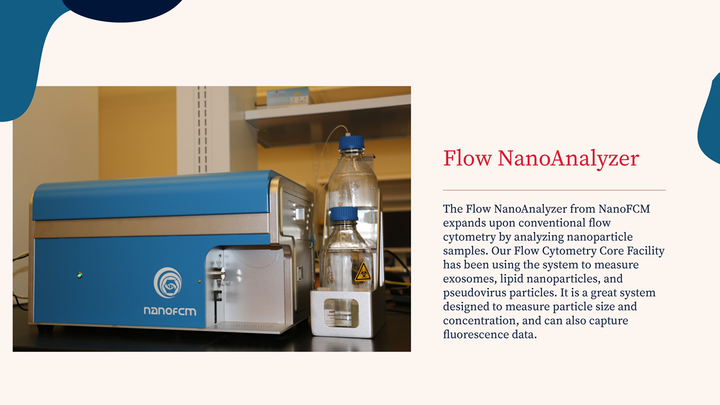
Informational graphic featuring the NanoFCM Flow NanoAnalyzer on a laboratory bench. The blue and silver NanoAnalyzer instrument is shown with the NanoFCM logo on the front. To the right are two clear bottles with blue caps connected by tubing and a small sample vial holder placed in front. Red header text reads “Flow NanoAnalyzer,” with descriptive text about the instrument displayed on the right in a clean white and blue layout.
Equipment - CytoFLEX LX
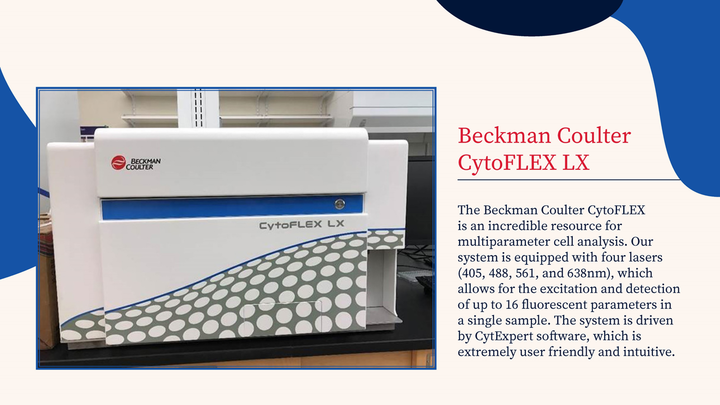
Informational graphic featuring a Beckman Coulter CytoFLEX LX flow cytometer on a laboratory bench. The white instrument has a blue horizontal accent strip, patterned gray front panel, and the label “CytoFLEX LX” on the front. To the right, text describes the instrument’s lasers, fluorescent parameters, and CytoExpert software. The graphic uses a white and blue design layout with the Beckman Coulter logo visible on the instrument.
Fluorofinder.com - Design Tools for Flow

Informational graphic titled “Check out FluoroFinder.com.” The image shows a screenshot of the FluoroFinder website dashboard with icons labeled Flow Cytometry, Spectra Viewer, Product Search, Reagent Directory, Training, Analysis Software, Validated Panels, and Inventory. Text on the right explains that FluoroFinder.com helps build multi‑parameter antibody panels based on specific instrumentation and notes it is free to use. The graphic includes the FluoroFinder logo.
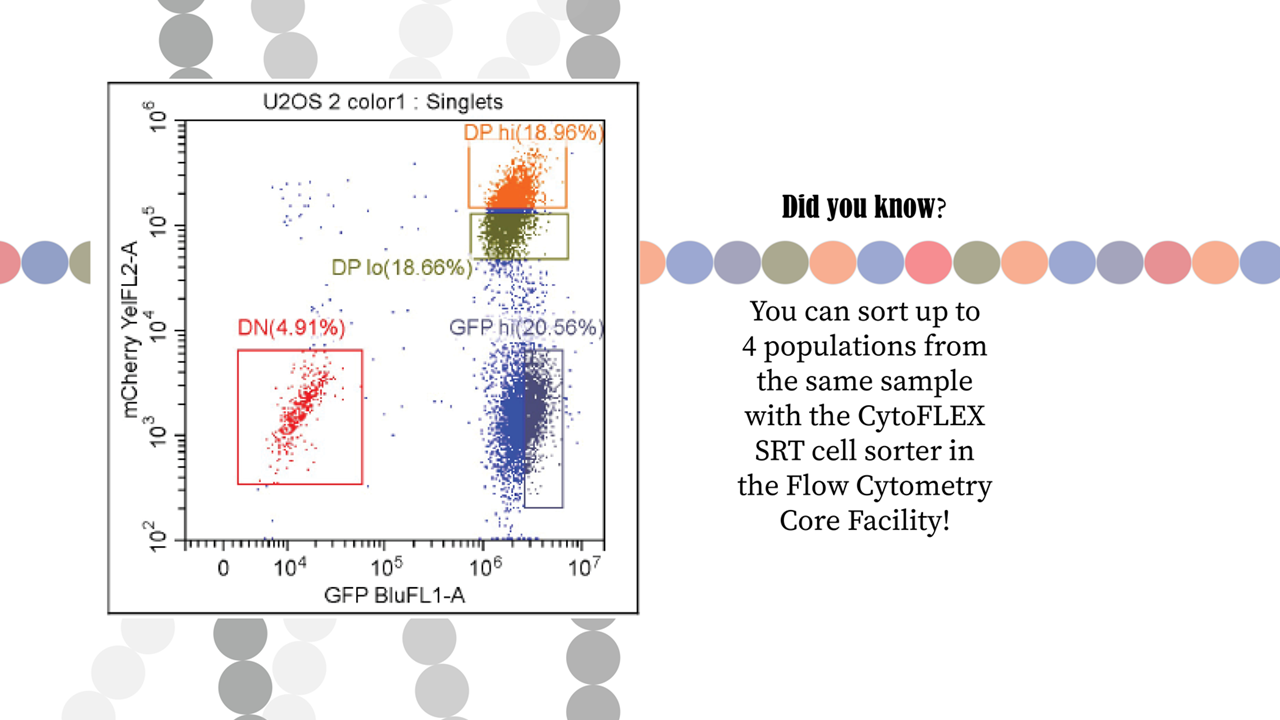
Sorting 4 Populations
Graphic showing a flow cytometry scatter plot labeled “U2OS 2 color1: Singlets,” with GFP signal on the x‑axis and mCherry signal on the y‑axis. Four gated cell populations are highlighted with different colors and percentages. To the right, text reads, “Did you know? You can sort up to 4 populations from the same sample with the CytoFLEX SRT cell sorter in the Flow Cytometry Core Facility!”
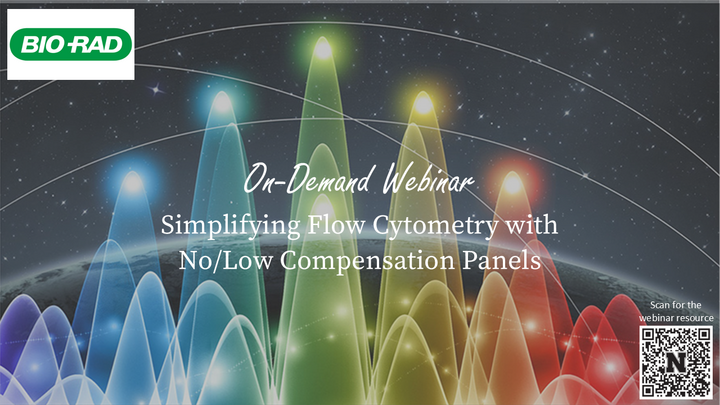
Flow On Demand Webinars
Promotional graphic for a Bio‑Rad on‑demand webinar titled “Simplifying Flow Cytometry with No/Low Compensation Panels.” The design features colorful overlapping spectral curves against a dark background, suggesting flow cytometry data. Bio‑Rad logo appears in the top left, and a QR code on the right invites viewers to scan for the webinar resource.

Microscopy

EVOS M7000 Cell Imaging System
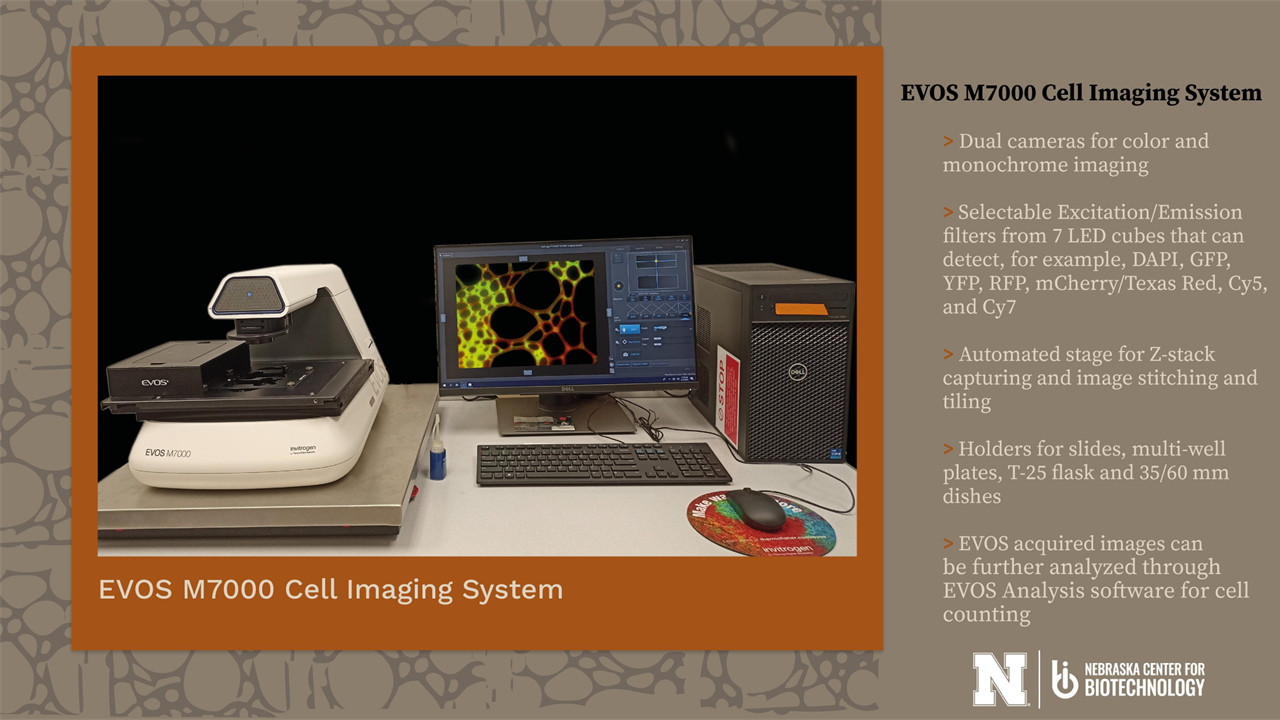
Informational graphic highlighting the EVOS M7000 Cell Imaging System. The image shows the EVOS microscope on a lab bench next to a computer displaying a colorful fluorescence cell image. Text lists features including dual cameras for color and monochrome imaging, selectable excitation and emission filters, automated Z‑stack imaging, multiple sample holders, and analysis software for cell counting. Logos for the University of Nebraska and the Nebraska Center for Biotechnology appear in the bottom right.
Capturing the underworld with the SEM
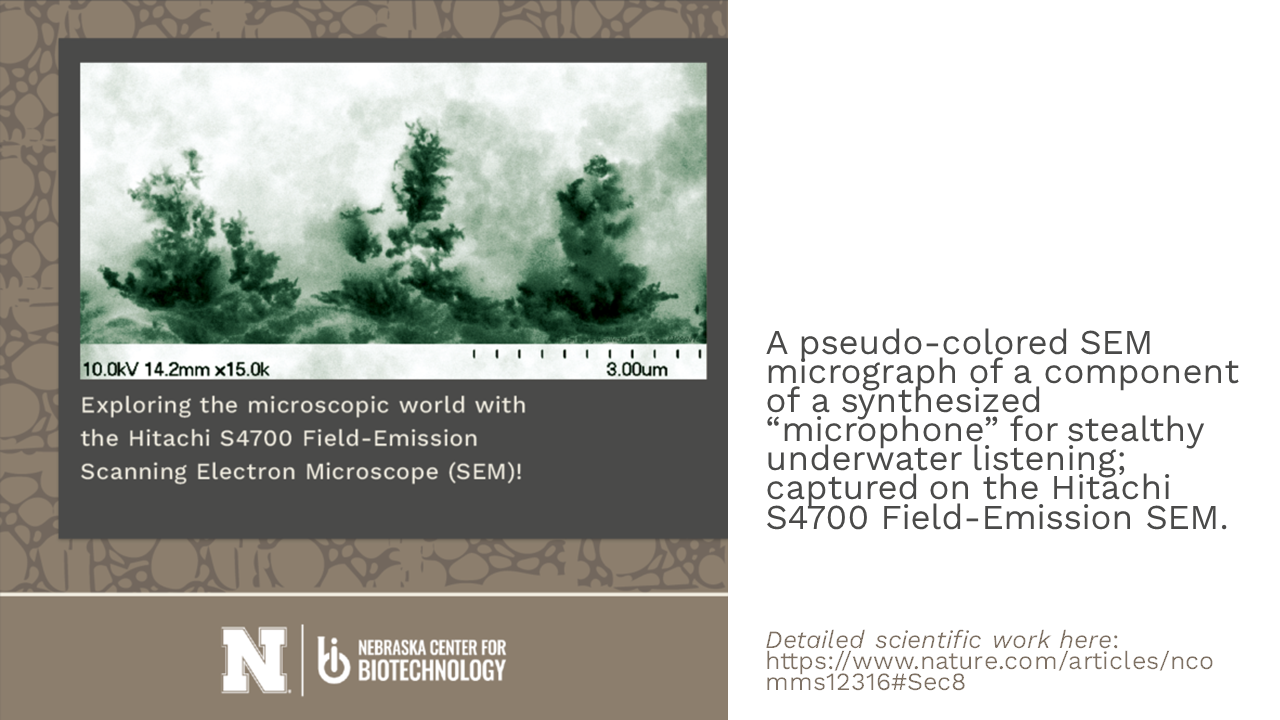
Informational graphic featuring a pseudo‑colored scanning electron microscope image of a forest‑like microscopic structure with a scale bar. Text explains the image was captured using a Hitachi S4700 Field‑Emission SEM and shows a component of a synthesized “microphone” for underwater listening. Additional text references a scientific publication for detailed results. Logos for the University of Nebraska and the Nebraska Center for Biotechnology appear at the bottom.
The journey from monocular microscopes
Informational graphic from the Nebraska Center for Biotechnology showing a vintage monocular microscope on a wooden surface. Text reads, “From monocular to binocular,” explaining the evolution of early monocular microscopes to J. Riddell’s binocular design in the 1850s and today’s digital advancements. A decorative patterned border surrounds the image, with University of Nebraska and Nebraska Center for Biotechnology logos at the bottom.
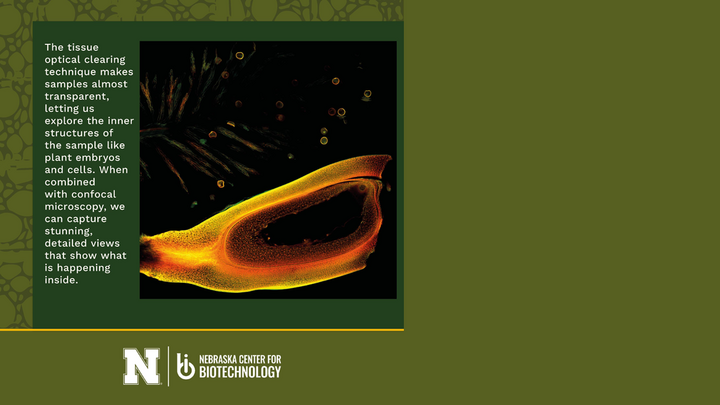
Optical Clearing Technique Image
Informational graphic from the Nebraska Center for Biotechnology about tissue optical clearing. Text explains that optical clearing makes samples nearly transparent to reveal internal structures such as plant embryos and cells when combined with confocal microscopy. The image shows a colorful, high‑resolution microscopic view of an internal biological structure on a dark background, with University of Nebraska and Nebraska Center for Biotechnology logos at the bottom.

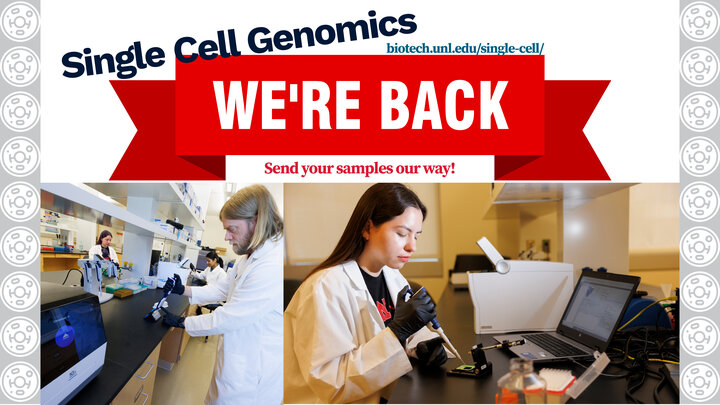
Single Cell Genomics

We're Back!
Promotional graphic announcing “Single Cell Genomics, We’re Back.” A red banner states “Send your samples our way.” Below are photos of laboratory work showing researchers using pipettes, sequencing equipment, and computers in a lab setting. The graphic includes the Single Cell Genomics title and a web address for more information, with a clean, professional design focused on scientific research and services.

Proteomics and Metabolomics

Metabolite Equipment for Self Service Use
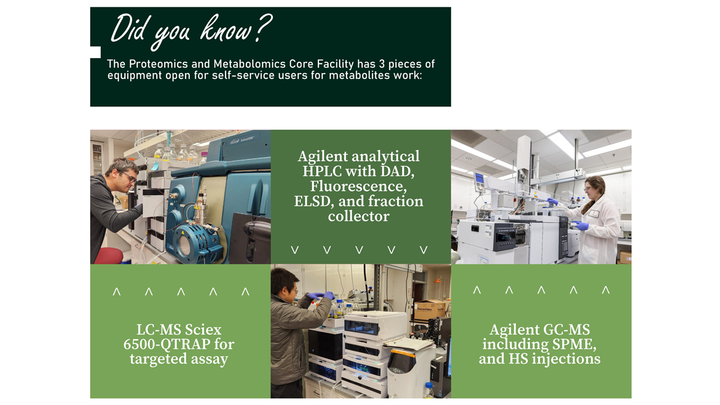
Informational graphic titled “Did you know?” describing self‑service metabolomics equipment available at the Proteomics and Metabolomics Core Facility. The layout includes three labeled equipment photos: an Agilent analytical HPLC with DAD, fluorescence, ELSD, and fraction collector; an LC‑MS SCIEX 6500 QTRAP for targeted assays; and an Agilent GC‑MS with SPME and headspace injections. Each photo shows the instrument installed in a laboratory with bench‑mounted modules and connected tubing.
Columns Used for Proteomics and Metabolomics Work
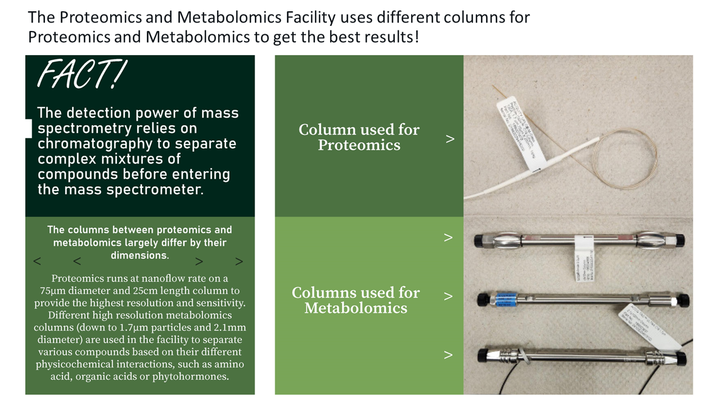
Informational graphic explaining that the Proteomics and Metabolomics Facility uses different chromatography columns. The left panel contains text describing how mass spectrometry relies on chromatography and how proteomics and metabolomics columns differ by size and separation properties. The right side shows three photographed chromatography columns laid on a beige surface: one labeled for proteomics at the top and two labeled for metabolomics below. Green section headers read “Column used for Proteomics”
Self-Service use of UPLC
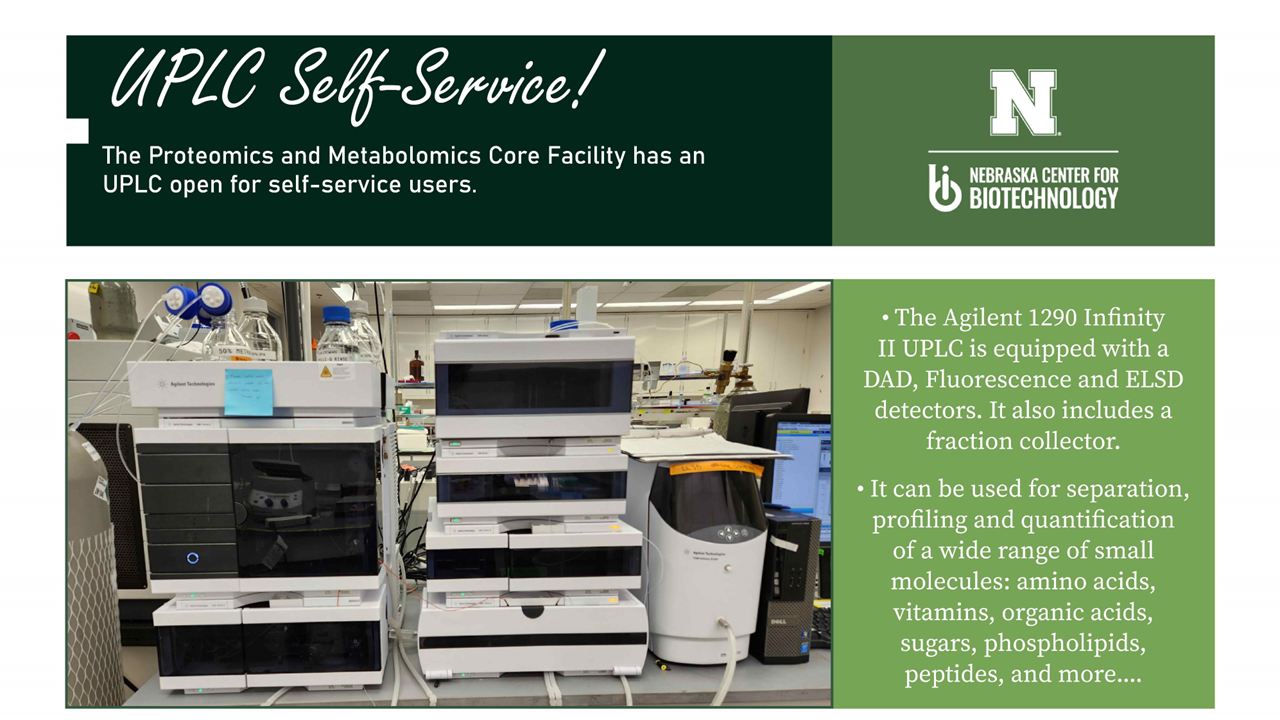
Promotional graphic titled “UPLC Self‑Service!” from the Nebraska Center for Biotechnology. The image shows an Agilent 1290 Infinity II UPLC system in a laboratory. Text explains the Proteomics and Metabolomics Core offers UPLC open for self‑service users. Bullet points describe detectors including DAD, fluorescence, and ELSD, a fraction collector, and applications such as separation and quantification of amino acids, vitamins, organic acids, sugars, phospholipids, and peptides. Biotech logo on top right..
Outreach in PMF
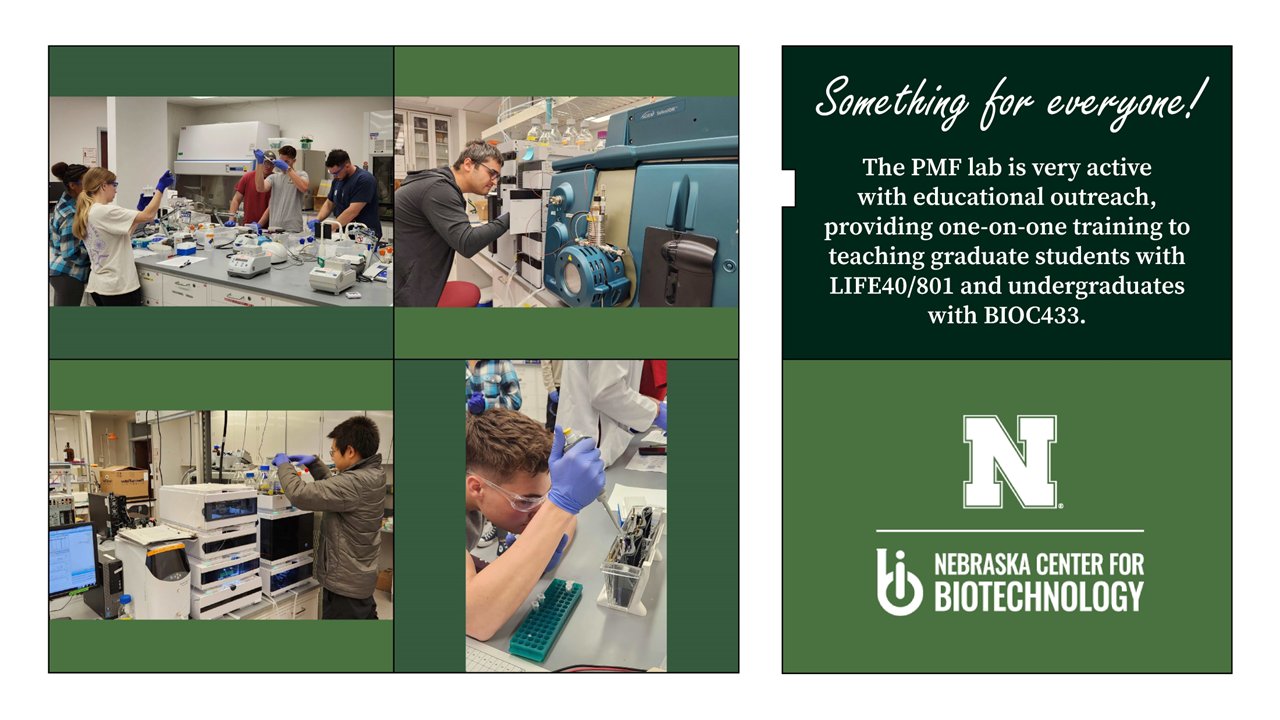
Graphic featuring a four‑image collage of laboratory training and research activities, including researchers working at benches, using analytical instruments, and operating lab equipment. To the right, text reads, “Something for everyone! The PMF lab is very active with educational outreach, providing one‑on‑one training to teaching graduate students with LIFE 801 and undergraduates with BIOC 433.” Nebraska Center for Biotechnology and University of Nebraska logos appear at the bottom.
HPLC Assay
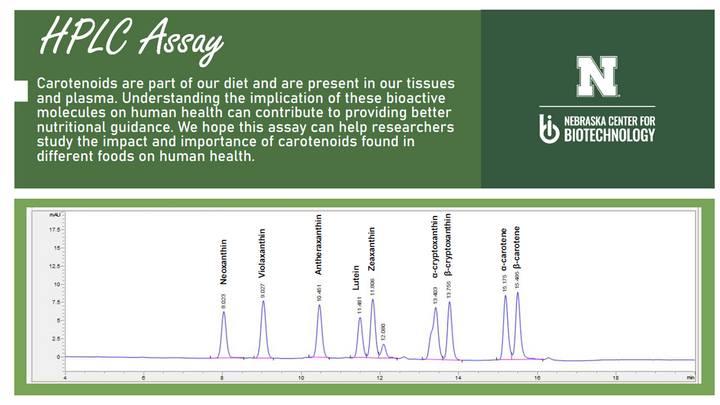
Informational graphic titled “HPLC Assay” from the Nebraska Center for Biotechnology. Text explains the role of carotenoids in diet and human health and how the assay helps study their impact. Below is an HPLC chromatogram showing multiple labeled peaks for different carotenoids over time. University of Nebraska and Nebraska Center for Biotechnology logos appear on the right.
Proteomics: Why and How?
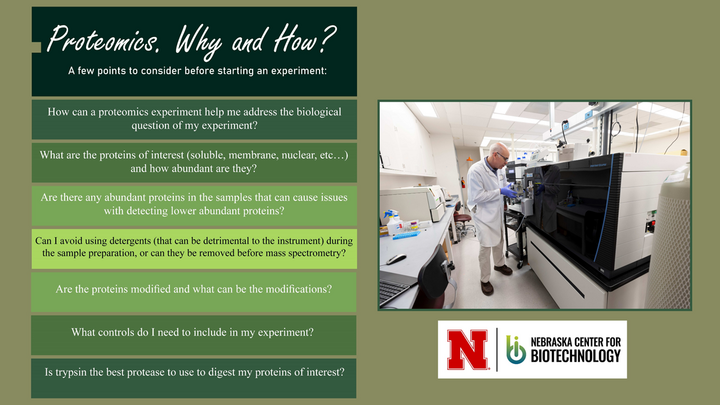
Informational graphic titled “Proteomics: Why and How?” from the Nebraska Center for Biotechnology. The left side lists questions to consider before starting a proteomics experiment, including protein types, abundance, sample preparation, modifications, controls, and use of trypsin. The right side shows a laboratory scene with a researcher operating a mass spectrometry instrument. University of Nebraska and Nebraska Center for Biotechnology logos appear at the bottom.

Director Spotlights

Daniel Schachtman - Director
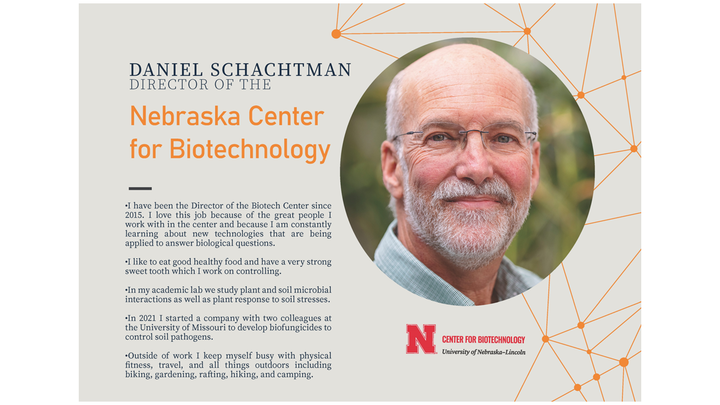
Profile graphic introducing Daniel Schachtman, Director of the Nebraska Center for Biotechnology. The layout shows a circular portrait photograph on the right and text on the left describing professional background and leadership at the Center. The title “Nebraska Center for Biotechnology” appears in large orange text. The background is light gray with an orange network pattern, and the University of Nebraska–Lincoln Center for Biotechnology logo appears at the bottom.
Dirk Anderson - Flow Cytometry Director

Profile graphic introducing Dirk Anderson, Core Director of Flow Cytometry. The layout shows a circular portrait photograph on the right and text on the left listing professional background and experience in flow cytometry. The title “Flow Cytometry” appears in large orange text. The background is light gray with an orange network pattern, and the University of Nebraska–Lincoln Center for Biotechnology logo appears at the bottom.
Eduardo Romero - CryoEM Director
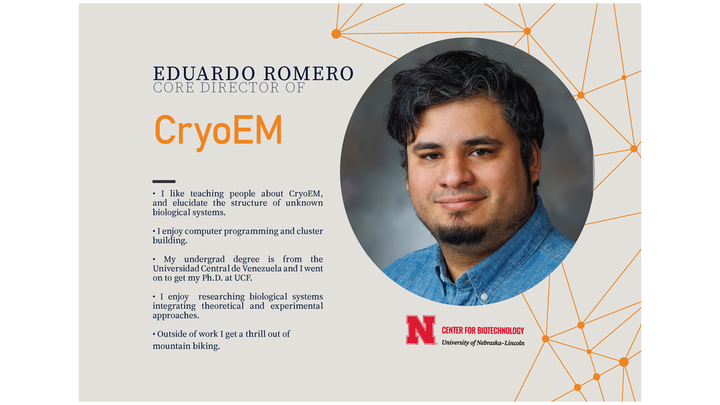
Profile graphic introducing Eduardo Romero, Core Director of CryoEM. The layout features a circular portrait photograph on the right and text on the left listing professional interests, education, and research focus related to Cryo‑electron microscopy and biological systems. The title “CryoEM” appears prominently in orange. The background is light gray with an orange network pattern. The University of Nebraska–Lincoln Center for Biotechnology logo appears at the bottom.
Jean-Jack M. Riethoven - Bioinformatics Director

Profile graphic introducing the Core Director of Bioinformatics at the Nebraska Center for Biotechnology. The layout shows a circular portrait photo on the right and text on the left describing extensive experience in bioinformatics and computational biology, leadership of the UNL Bioinformatics Core, academic background, and research interests. The design uses light gray and orange accents. University of Nebraska–Lincoln Center for Biotechnology logo appears at the bottom.
Sophie Alvarez - Proteomics and Metabolomics Director
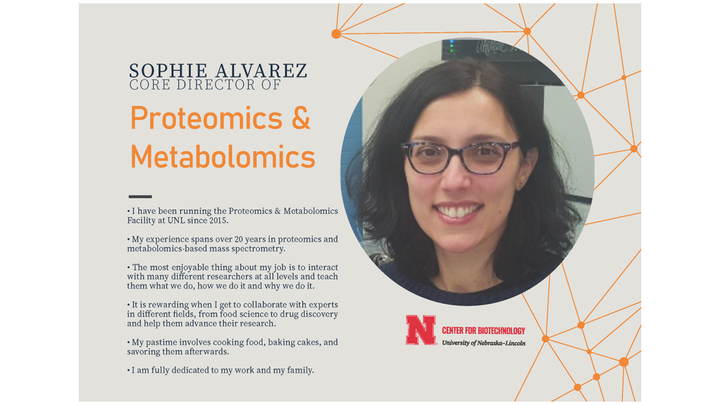
Profile graphic for the Core Director of Proteomics & Metabolomics at the Nebraska Center for Biotechnology. The layout shows a circular portrait photo on the right and text on the left describing leadership of the UNL Proteomics and Metabolomics Facility, experience in mass spectrometry, collaboration with researchers, and personal interests. The design uses light gray and orange accents, with University of Nebraska–Lincoln and Center for Biotechnology logos at the bottom.
Y. Joe Zhou - Microscopy Director
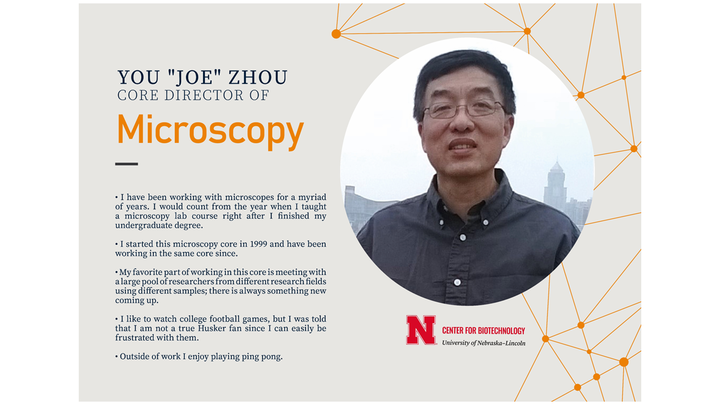
Profile graphic introducing You “Joe” Zhou, former Core Director of Microscopy. The layout features a circular portrait photo on the right and text on the left describing long‑term experience in microscopy, leadership of the microscopy core since 1999, interests in collaborating with researchers, and personal hobbies. The design uses light gray and orange accents. University of Nebraska–Lincoln Center for Biotechnology logo appears at the bottom.

Team Member Spotlights

Bara Altartouri - Researcher, Microscopy
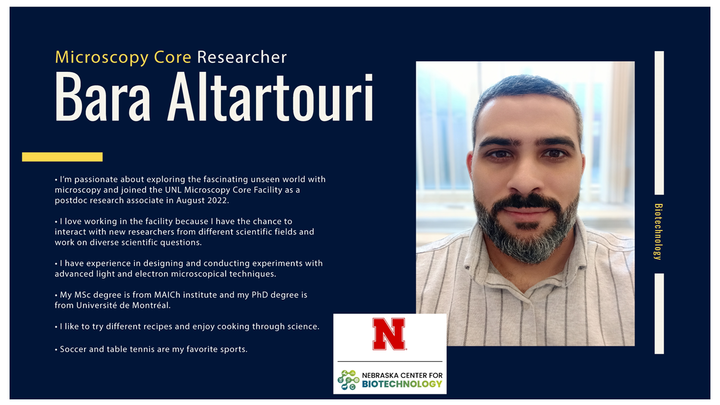
Profile graphic for a Microscopy Core researcher. The layout shows a portrait photo on the right and text on the left describing professional interests and experience in microscopy research, experimental design, and advanced imaging techniques. The background is dark blue with yellow accents. University of Nebraska and Nebraska Center for Biotechnology logos appear at the bottom.
Terri Fangman - Retired Lab Manger, Microscopy
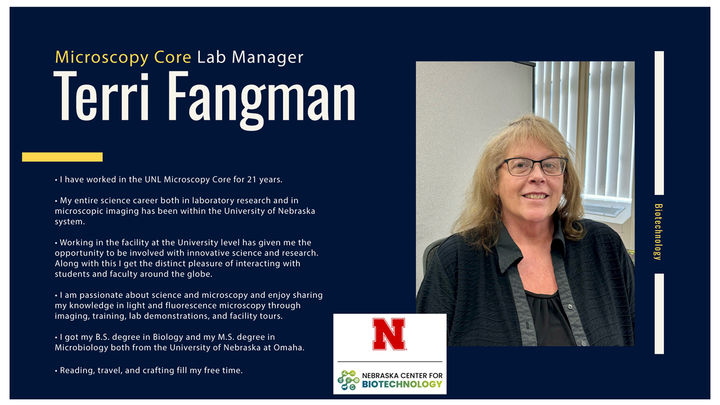
Profile graphic for Microscopy Core Lab Manager Terri Fangman. The design shows a portrait photo on the right and text on the left describing professional experience in microscopy, laboratory research, training, and education at the University of Nebraska. The background is dark blue with yellow accents. University of Nebraska and Nebraska Center for Biotechnology logos appear at the bottom.
Chia Sin - Bioinformatician, Bioinformatics
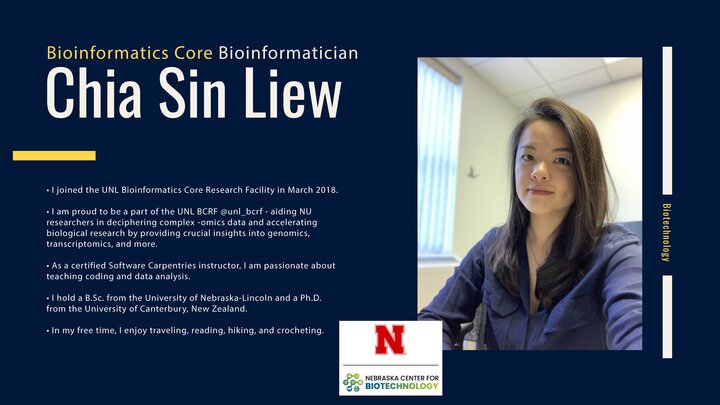
Profile graphic for the UNL Bioinformatics Core featuring bioinformatician Chia Sin Liew. The left side contains text describing professional background, training, and research support work in bioinformatics. The right side shows a portrait photo of the bioinformatician seated in an office setting. Logos for the University of Nebraska and the Nebraska Center for Biotechnology appear at the bottom.